Join Seeds of the Month:

Find Farm Supplies Here:

Find Garden Supplies Here:

Gardener's Supply Company

Find Almost Anything Else Here:

Recommended Books:

First Seeds of the Month Are Here!

1st Seeds of the Month

We received our first Seeds of the Month Club seeds, and I’m quite pleased with them.  Eight different vegetable varieties come the first month, and I’ve never grown any of them before  so am looking forward to trying them.  We got Lemon Basil, Large Leaf Sorrel, Black Diamond Watermelon, Anaheim Chili Pepper, Thomas Laxton Pea, Green Globe Artichoke, Homestead Tomato, and Golden Wax Bean.

The back of the packets all give a description of the variety, days to germination, days to maturity, and all the information anyone would need on when, where, and how to plant as well as tips on care, harvesting, eating, and health benefits.  It looks like it’s too late [...]

Continue reading First Seeds of the Month Are Here

Seeds of the Month Club

Seeds of the Month Sign-Up

I heard about the “Seeds of the Month Club” a few weeks ago, and was really intrigued by the concept.  I just love looking through seed catalogs, but with all the choices today, I’m always conflicted about what new seed varieties to try.  So I was excited to learn that for just $3.09 per month, the Seeds of the Month Club would send me eight packets of seed the first month and four packets of seeds for the next 11 months.  For a garden lover like me, it’s a perfect monthly treat – and I don’t even have to agonize [...]

Continue reading Seeds of the Month Club

Vegetable Seeds for the 2013 Garden

Vegetable Variety

This is our annual list of vegetable seeds for Bramblestone Farm, and updating the list has again made me anxious for spring.  As always, I dream of a perfect garden – no weeds, abundant yields, no pests, and perfect produce – well it’s good to dream.

Many of the vegetable seeds on the list are left-over from previous years because seeds stay viable for several years (if carefully stored), and saving seeds from year to year cuts seed costs dramatically.  If you scroll to the bottom of the list, you’ll see that our seed will cost under $40.00, even though we [...]

Continue reading Vegetable Seeds for the 2013 Garden

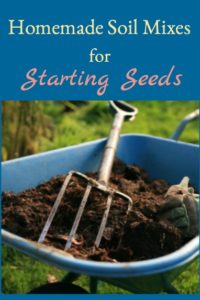
Making Soil Mix for Seed Starting

420 Soil Blocks

This will be our second year using “soil blocks” to germinate seeds and grow transplants (see Soil Blocks for Starting Transplants); but, before I make the soil blocks to start the seeds, I make seed starting mix using a recipe from The New Organic Grower by Elliot Coleman.

3 buckets (10 quart bucket) brown peat

1/2 cup lime

2 buckets coarse sand

1 cup blood meal

1 cup colloidal phosphate (22%)

1 cup greensand

1 bucket soil

2 buckets compost

To make the seed starting mix, measure the peat into a large mixing container, add the lime and mix.  Then add the sand, blood meal, phosphate, and greensand – mix again.  Add the soil [...]

Continue reading Making Soil Mix for Seed Starting

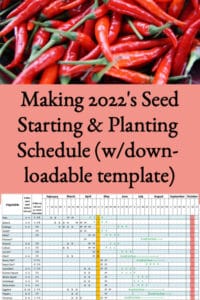
Making 2013's Seed Starting & Planting Schedule (w/downloadable template)
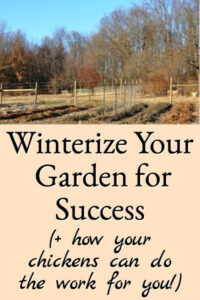
2013 Seed Starting Schedule

I want to make sure we do a better job this year with the garden and starting seedlings (got side-tracked with goat kids last year); so I’ve created our annual seed starting and planting schedule a little early (see below) to keep us on track.  It helps me keep focused on buying seeds, starting transplants, getting supplies, and making sure the garden beds are prepared on time.

I start with my schedule from the previous year (see Making 2012′s Seed Starting & Planting Schedule), copy it to a new spreadsheet tab, consult my notes from last year’s garden, and then work up the new plan.  I’ve [...]

Continue reading Making 2013′s Seed Starting & Planting Schedule (w/downloadable template)
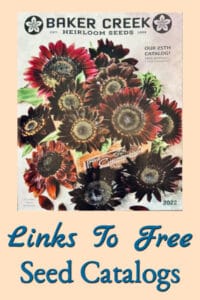
Free Garden Seed Catalogs

collection of grain, seeds and  legumes

The snow’s been falling here today, and to me that means it’s time for garden seed catalogs again.  I don’t want  most of the catalogs we get in the mail, but the yearly garden seed catalogs are different.  I love looking through them; and spend hours studying and plotting next years perfect garden (well, it is in my imagination).

Unfortunately, many companies are choosing to put their catalogs on the Internet instead of making print catalogs.  I understand that it costs less and is greener; but I still like having a catalog in my hand for studying the different varieties, descriptions, and pictures.  The Internet just doesn’t offer the same experience.

The [...]

Continue reading Free Garden Seed Catalogs

Keep Stalky Perennials to Feed Birds

Finches Harvesting Fall Seed

As we’re preparing for winter around the farm, it’s tempting to “clean-up” the perennial borders by cutting all the weedy stalks and seed heads off.  But, by doing less and leaving medium to tall perennials in place, we can provide winter food for the birds and observe them more too.

Leave perennials like asters, black-eyed Susans, butterfly weed, coneflowers, Joe-Pye weed, oat grass, and goldenrod standing in the fall garden after they finish blooming.  Cardinals, finches, and sparrows will harvest seed while clinging to the stalks; and juncos or towhees will harvest seed from the ground.


Even after the seeds have all been harvested, the spent perennials still provide nourishment for the birds.  Chickadees, [...]

Continue reading Keep Stalky Perennials to Feed Birds

Establishing New Lawns

grass 3

In our early years, we moved around the country quite a bit, and ended up putting in many new lawns.  We found that establishing a new lawn is best done in the fall; so we finally put in a front lawn at Bramblestone Farm this fall.  Prior to this year, we had to drive the tractor through the front yard to get to part of the farm, so we never bothered putting one in.

We’ve settled on a pretty simple process for establishing a new lawn – it’s probably old-fashioned, but it seems to work quickly and effectively:  bring in some good topsoil (you don’t want poor top soil with [...]

Continue reading Establishing New Lawns

Fall Division of Spring & Summer Blooming Perennials

Lifting the Parent Plant

Fall is the best time to divide spring and summer blooming perennials – they’re finished putting energy into blooming, and new divisions will re-establish quickly during the cooler, wetter fall weather. Dividing helps control the size of plants, rejuvenates them, and increases the number of plants for your garden.

For fall blooming perennials, it’s generally better to wait until spring to divide. By dividing plants when they’re not blooming, they can put all their energy into root and leaf growth.

What Plants to Divide

Most perennials should be divided every three to five years. It’s best to divide plants when they still look good, [...]

Continue reading Fall Division of Spring & Summer Blooming Perennials

Terrific Cherry Tomatoes

cherry tomatoes

I’m writing about two cherry tomatoes that we grew this year, so that I don’t ever forget their names – they were great!  We had only one plant of each, but we didn’t need any more; and I’ll bet we have about a million volunteer cherry tomato plants next year because we couldn’t keep up with them.

The first was a tiny, very prolific little red tomato called Matt’s Wild Cherry.  It’s very tasty – like tomato candy.

The second was a slightly larger (about an 1″ in diameter at the largest) yellow cherry tomato called Sun Gold.  It may just be the tastiest (in [...]

Continue reading Terrific Cherry Tomatoes

Monster Zucchini? Chicken Love Them

Zuchinni_Rooster Looking


In our part of the country, we had a drought for most of the summer and then suddenly rain.  The rain was very welcome, but caused some monster zucchini in our garden – much larger than I really wanted to use.  So, what to do with all those monster zucchini – feed them to the chickens.  They’re very happy to have them.


It’s seldom that we see the roosters taking a break and laying down, they’re usually on the alert for predators and food all the time.  So, we were amused to see that even they were willing to sit down, take a break, and enjoy the [...]

Continue reading Monster Zucchini? Chicken Love Them

Winter Squash: Harvesting, Curing, and Storing

Winter Squash

I love harvesting winter squash – as we’re rushing to get all the other garden veggies harvested and processed for winter storage; all the winter squash need is gathering, curing, and storing – chopping, cooking, canning or freezing not required!  We’ve got a record batch this year too – I saved seed from several varieties last year, so we’ve got lots of squash and pumpkin coming in.

Harvesting

Winter squash should be harvested after the fruit turns a deep color and the rinds harden (usually during September and October), but definitely before heavy frost.  The fruits should be cut from the vine carefully, leaving [...]

Continue reading Winter Squash: Harvesting, Curing, and Storing

Drying Lavender

Lavendar Blooming

The lavender is blooming now, so it’s time to start drying it – I love having it around for sachets and crafts.  It’s well known for its insect repellant properties and we love the fragrance.

There’s really nothing difficult about drying lavender - simply gather the flowering stems just as the flowers start to open and hang in small bunches to dry.  When cutting the stems, be sure to leave a few inches of green growth on the plant – don’t go all the way down to the woody portion of the stem.  When you’ve cut enough blossoms to fill your hand, wrap a rubber band [...]

Continue reading Drying Lavender

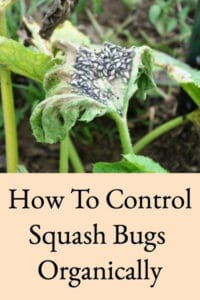
Squash Bugs

Zuchinni without Squash Bug

The zucchini looks like it’s doing great this year – right?


It looks so nice and lush – but at a closer look, there are squash bugs hiding in there!


What are squash bugs? Well, they’re brownish black, about 3/4″ – 1″ long, and they feed on vining crops like squash, pumpkins, and melons.  As you can see, they cause the plant to wilt and eventually die.   They’re generally found wherever these vining crops are grown.  Ugly, aren’t they?

Organic controls for squash bugs include planting other varieties that repel them (obviously I didn’t do enough of that) such as marigold, nasturtium, and radish.  Garden sanitation and weed [...]

Continue reading Squash Bugs

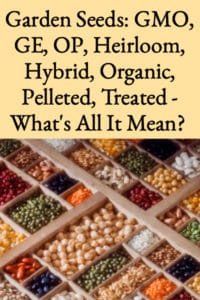
Garden Seeds – GMO, GE, OP, Heirloom, Hybrid – What’s It All Mean?

seeds for the garden

I can remember when you went to your local feed & seed supply store to buy garden seeds; and your choices were limited to a few – how things have changed!  Today there are numerous seed catalogs available with hundreds of offerings, and you can also order from thousands of varieties online – but the choices can be confusing.  What’s the difference between GE, GMO, OP, Heirloom, Hybrid, Organic, Pelleted, and Treated seed?  Here’s the explanation:

OP (Open Pollinated) – open pollinated seeds are those that are produced by pollination from wind, insects, or self-pollination.  You can save seed from open-pollinated varieties and [...]

Continue reading Garden Seeds – GMO, GE, OP, Heirloom, Hybrid – What’s It All Mean?

Home & Garden Blogs
Top Sites